

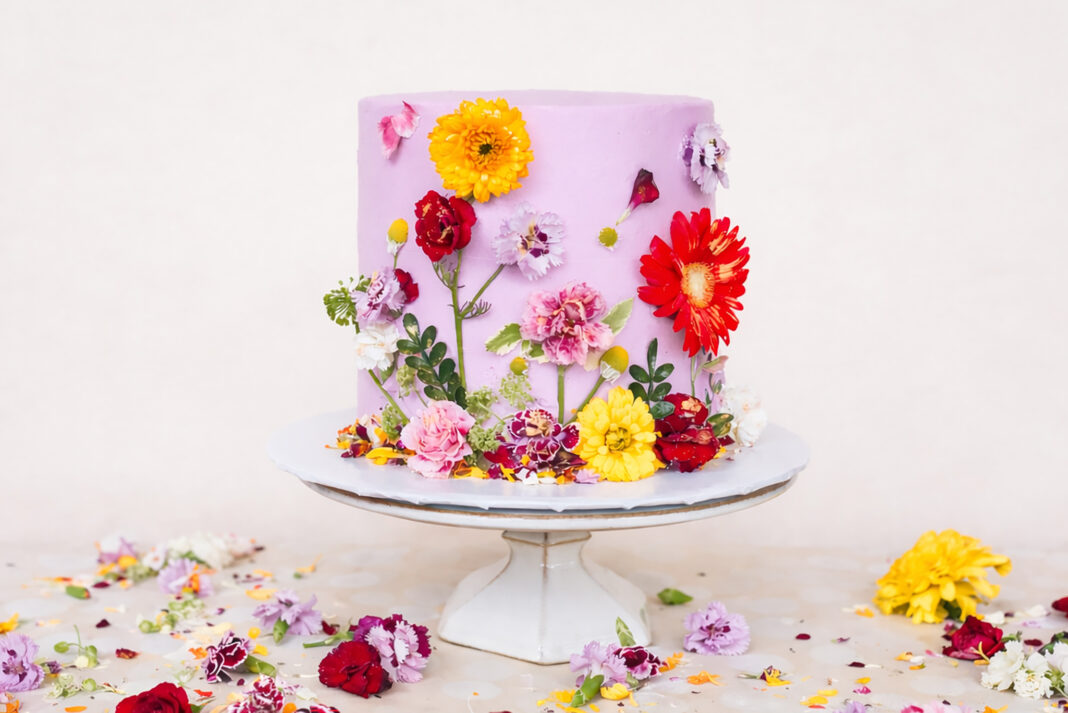
Edible flowers are one of the easiest ways to transform a simple cake into a stunning work of art. With their beautiful colors, unique shapes, and surprising range of flavors – from floral and sweet to citrusy and peppery – they add both visual appeal and an extra layer of creativity to your designs. Summer offers an abundance of edible blooms to choose from, making it the perfect season to experiment with fresh floral decorations.
In this tutorial by Wahida Karmally, you’ll learn how to decorate a lemon cake with fresh strawberries, vanilla buttercream, and a vibrant assortment of edible flowers from Gourmet Sweet Botanicals. Best of all, creating a beautiful edible flower cake doesn’t require advanced decorating skills or specialized tools. With a few simple techniques and thoughtful flower placement, you can create a breathtaking botanical cake that’s perfect for weddings, garden parties, and summer celebrations.
Edible Flowers Featured
- Marigolds are mild citrus with subtle spice notes. For cake decorating, they can be used to add brilliant and vibrant colors.
- Dahlias come in a variety of beautiful colors, shapes, and flavors and they last a long time. Just harvested, they are crisp and have a fairly bland, somewhat celery-like taste. They can also be spicy or bitter at this stage. Flavors can also range from a spicy apple to celery root or even carrot. After some storage time, they become sweeter, just right for your summer cake.
- Calendulas range in taste from light citrus to a sharp flavor resembling saffron. They can also be spicy to bitter, tangy, peppery, or even nutty in flavor.
- Cosmos have a slightly sweet “nectar” taste. The young shoots taste refreshing, similar to mango.
- Nasturtium carry a pleasant, aromatic, and floral flavor, sometimes slightly peppery with hints of mustard or watercress. These beautiful flowers can also have a wonderful, sweet candy taste—perfectly complementing any of the tartness in your cake.
- Carnations are peppery and spicy (only eat the petals), a beautiful addition to any summer cake.
- Dianthus have a pleasant spicy to floral taste, sometimes strong and tart with clove or nutmeg notes, offering a soft, yet somewhat crunchy texture and a lovely visual appeal for your cake.
- Chamomile flower stems work great as stems for your flowers, with mild apple notes.
- Celery snowflake leaf adds more green foliage.
Components
Edibles
- Edible flowers and leaves by Gourmet Sweet Botanicals
- Fresh strawberries
- Three 6-inch lemon-flavored cakes
- American buttercream frosting
- Gel food coloring: violet (Chefmaster)
Equipment
- Turntable
- Acrylic cake scraper
- Offset spatula
- Serrated knife
- Cake board
Assemble the Cake
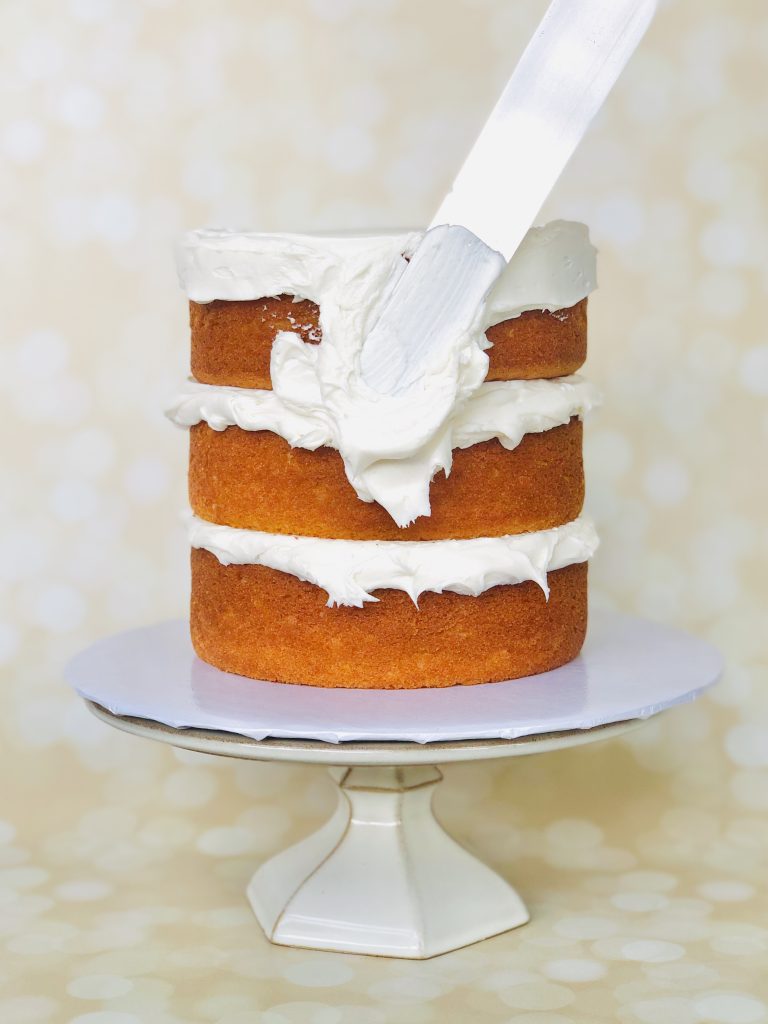
1. It’s very important to start with a cake that has had time to cool. Level cakes by removing domed tops with a serrated knife. If you have children around, surprise them with a piece of this tasty treat. Place a dollop of buttercream on top of the cake board and center on the turntable. This is where the first layer of cake is placed. The dollop acts as “glue” to hold the cake in place.
Spoon a heap of frosting onto this first layer and spread evenly using an offset spatula. Avoid crumbs by keeping the spatula parallel to the cake and spreading outward, back and forth, as thick as you wish. It’s imperative not to lift the spatula or let it touch the cake directly. It’s okay if frosting hangs over the edge. Stack the next layer and repeat.
2. Giving your cake a crumb coat is the next and most important step, as this will serve as a foundation for the outer frosting and smooth out the cake’s shape. Spread a layer of frosting around the whole cake with the offset spatula to lock in any crumbs. Start from the top and work down, filling in gaps and uneven surfaces along the way. Use enough frosting to spread it around without lifting it up or touching the cake directly with the spatula. It doesn’t have to look perfect and a little messy is okay. Once you have sealed in the crumbs, smooth off any excess frosting with the cake scraper, creating the “naked cake” look. Let the cake chill in the refrigerator for about 30 minutes.

3. The final step is to apply a thicker coat of frosting with a color of your choosing. I used a soft violet color because it is my mom’s favorite color and I think it sets a nice background for vibrant summer flowers. Start by adding dollops of frosting to the top and sides. Again, using the offset spatula, start at the top and work your way down, spreading the frosting around until the cake looks smooth. You can then use the cake scraper to even out the sides and top. Using a turntable, long, gentle strokes can help you achieve a smooth, even surface. Minor flaws will not be noticeable once the flowers have been added. Chill in the fridge for at least 30 minutes to set the frosting.

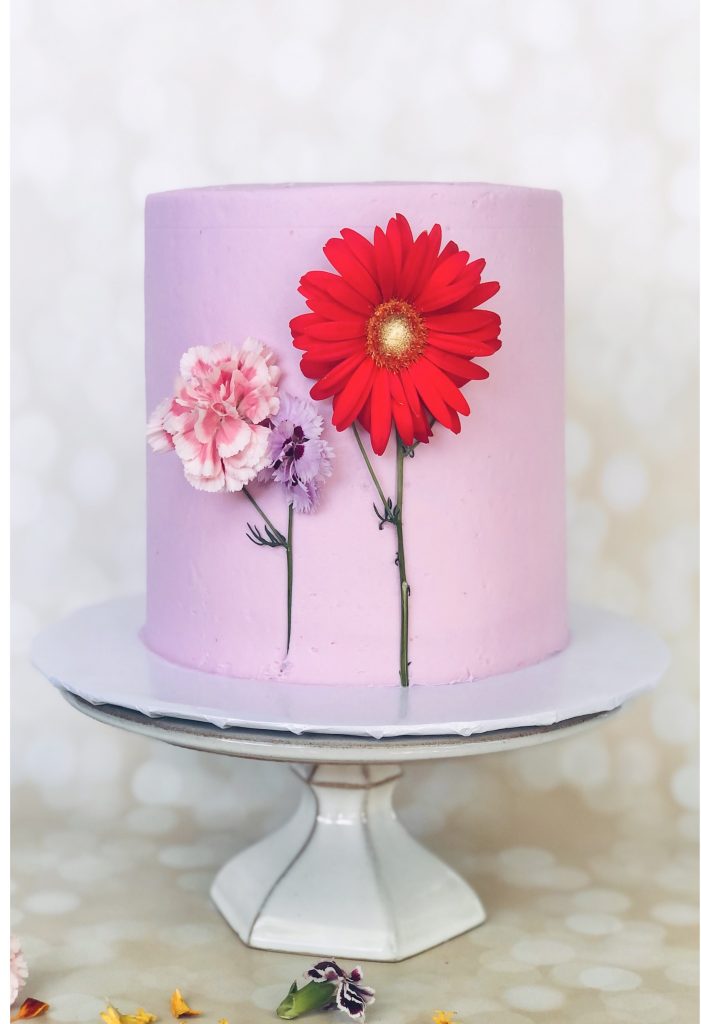

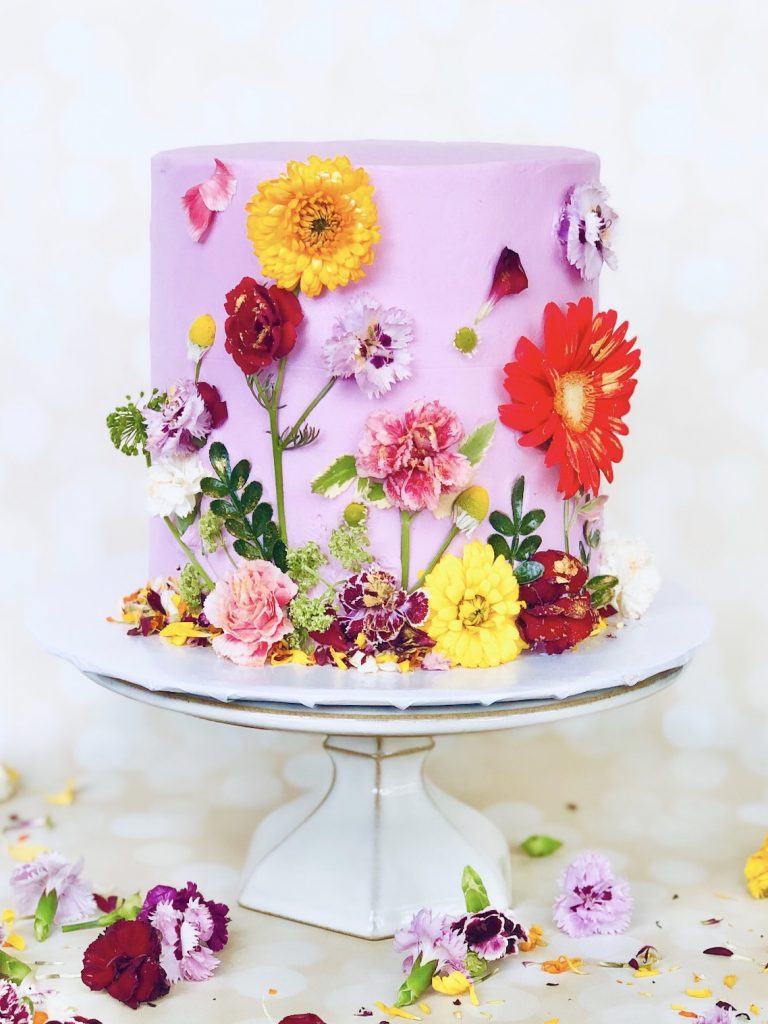

4. For this cake, I envisioned several beautiful flowers growing wild in an open field or in an overgrown, untended garden. The lavender background helped me choose several of the flowers with an eye toward balancing out the colors. I wanted to showcase the Gourmet Sweet Botanicals Premium Flower Assortment, so I chose a variety of beautiful flowers from their collection. I like using marigolds, dahlias, and calendulas because I love the pop of bright, bold yellow, orange, and gold. Cosmos, carnations, and dianthus add more colorful blooms to help fill in the rest.
I started by placing the gorgeous pink carnation in the middle to establish the center. I then added the orange calendula on the side to establish a big, bold, colorful edge. I wanted to create the illusion of flowers growing out of the ground, so I placed the flowers where I thought they would look good and then gave them chamomile stems and added the celery snowflake leaves and kinome leaves.
I shredded some of the petals to sprinkle them around the base of the cake. I finished it off with a few petals placed as if gently blowing through the air.
You can use whichever colors and combinations you like, so get creative, experiment, and try different flowers! Most of all, take some time to enjoy yourself. You’ve got this.
Alternative Edible Flower Finishes
- Allover “confetti” style using small flowers and petals
- Flower wreath on top
- Half-moon shape on top
- Big statement flowers on top
- Colorful blend with several different flowers
Wahida’s Top Tips for an Edible Flower Cake
- Frost the cake ahead of time.
- Keep edible flowers refrigerated until needed, as some flowers wilt quickly at room temperature.
- Place flowers on cake as close to serving time as possible.
- Only use edible flowers marked for consumption (food-grade, edible, or organic—no pesticides).
- If you cannot buy the flowers the same day you’re planning to use them, store them properly by putting them in a dry bag or container in the refrigerator. Delayed use results in discoloration and wilting.
Want more fresh flowers? Check out how to make a pressed flower cake!
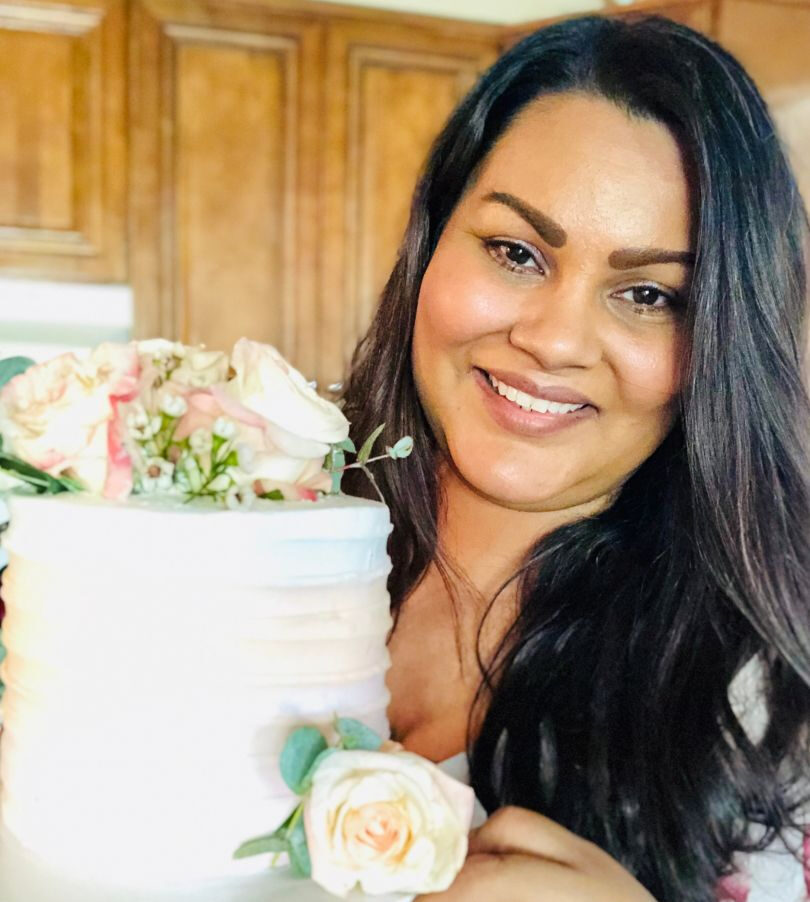
Wahida Liapis
Wahida Liapis is the baker and owner of CRAVE ‘ems, based in Temecula, CA. She’s also a stay-at-home wife and mother of two young children. Her background is in business, culinary arts, nutritional studies, and restaurant management. What started as a simple kitchen hobby in 2012 is now a licensed, home-based business specializing in celebration cakes, cupcakes, specialty loaves, and other baked treats for any occasion. All products are baked fresh to order using homemade recipes. Wahida loves to support her community’s public servants and donates goodies regularly.